Assessing the feasibility of multi-hazard monitoring in rural New South Wales using low-power LoRa sensor nodes and the MeshCore communication protocol. Building disaster resilience for at-risk communities.
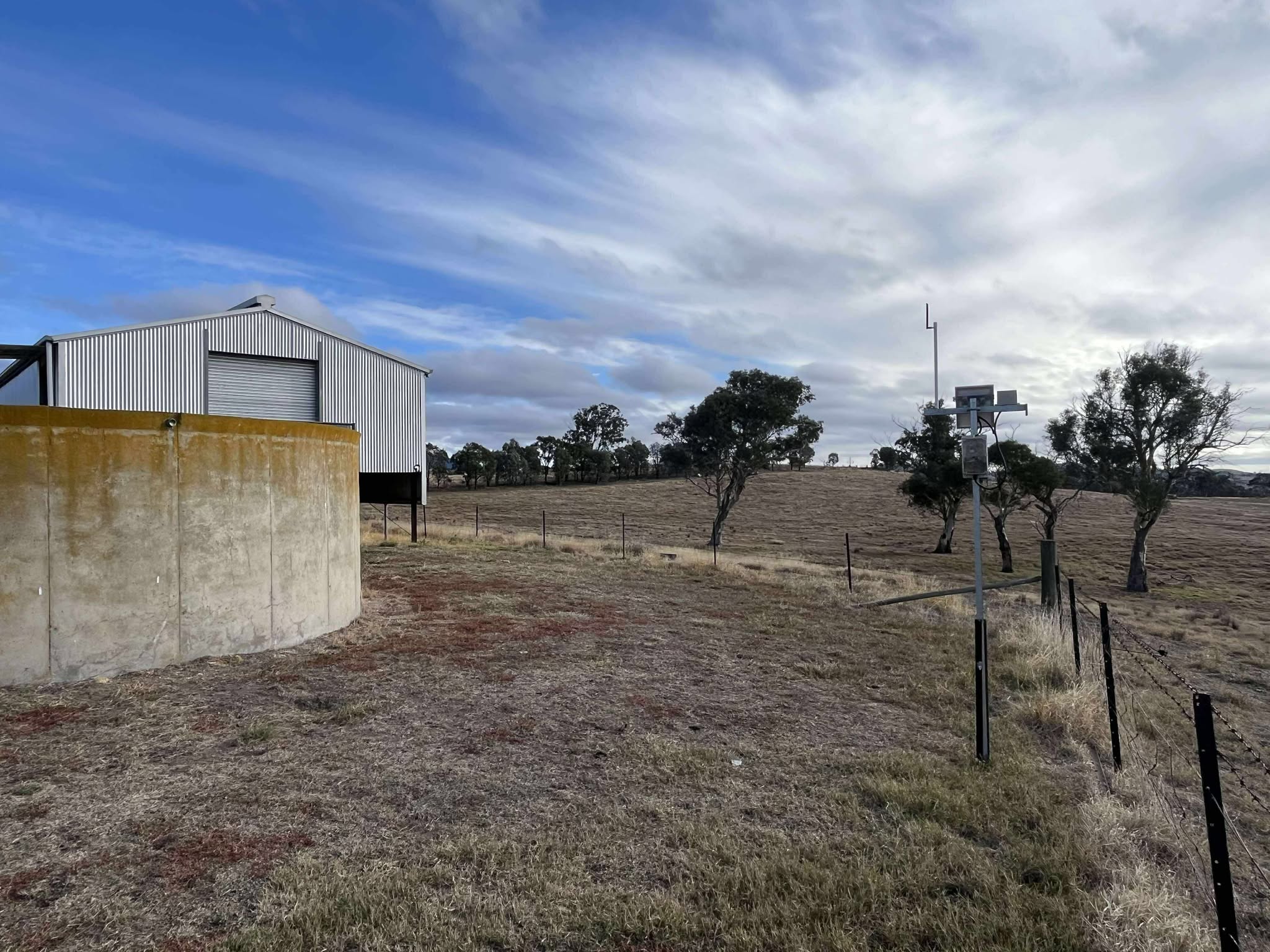
Research is well underway across all three workstreams. The Power and Enclosure Report has been completed with recommendations for solar panel sizing and battery capacity. The network and sensors workstreams are progressing well and are on track to be completed by the end of phase 1.
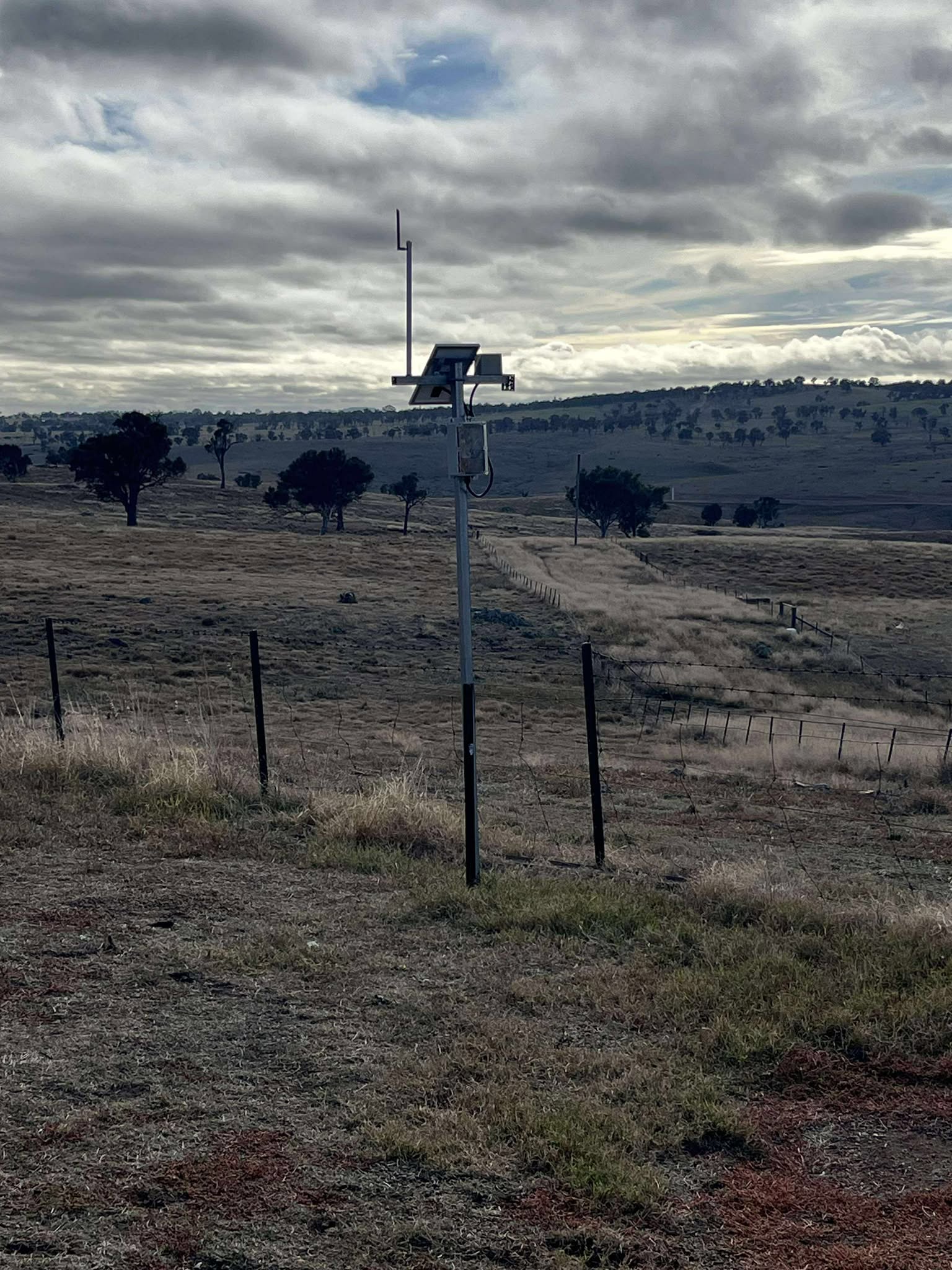
Rural communities in NSW often lack localised environmental data and experience poor data coverage โ problems that are severely compounded during hazardous weather events. This limits the ability of emergency services and communities to access the information they need for disaster preparedness and response.
This project extends a previous community disaster resilience initiative (a flood monitoring system built on a Meshtastic network) by investigating alternative LoRa-based protocols such as MeshCore, and broadening monitoring to cover multiple hazard types including bushfires, landslides, severe storms, and drought. The final output is a prototype hazard detection sensor with the infrastructure to communicate telemetry back to the pre-existing LoRa network.
The project is part of the Disaster Ready Fund (DRF) initiative, funded by the National Emergency Management Agency (NEMA) and running until March 2028. All work produced is designed to be handed forward to future teams.
Investigating MeshCore as a resilient LoRa-based backup communication network that operates reliably during extreme weather events.
Feasibility study and prototype development for environmental sensors detecting flooding, bushfire, landslide, storm, and drought indicators.
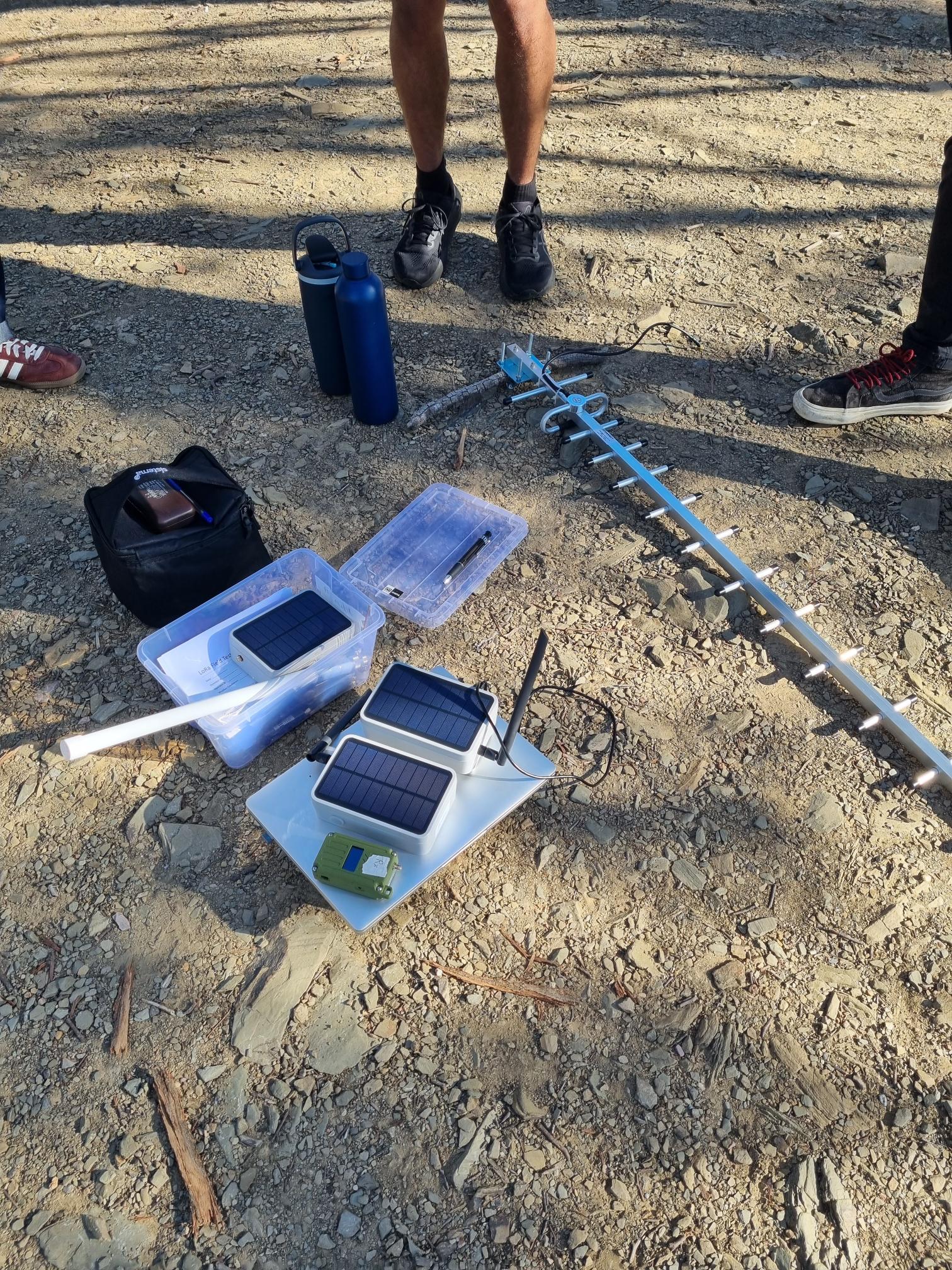
Solar-powered, COTS-based sensor nodes designed to be low-cost, scalable, and robust enough for remote rural conditions.
Working alongside Resilient Uki and local landowners to ensure the system meets real community needs and constraints.
The first half of the project runs three parallel workstreams, each tackling a distinct technical challenge. The second half integrates their outputs into a unified, deployable prototype.
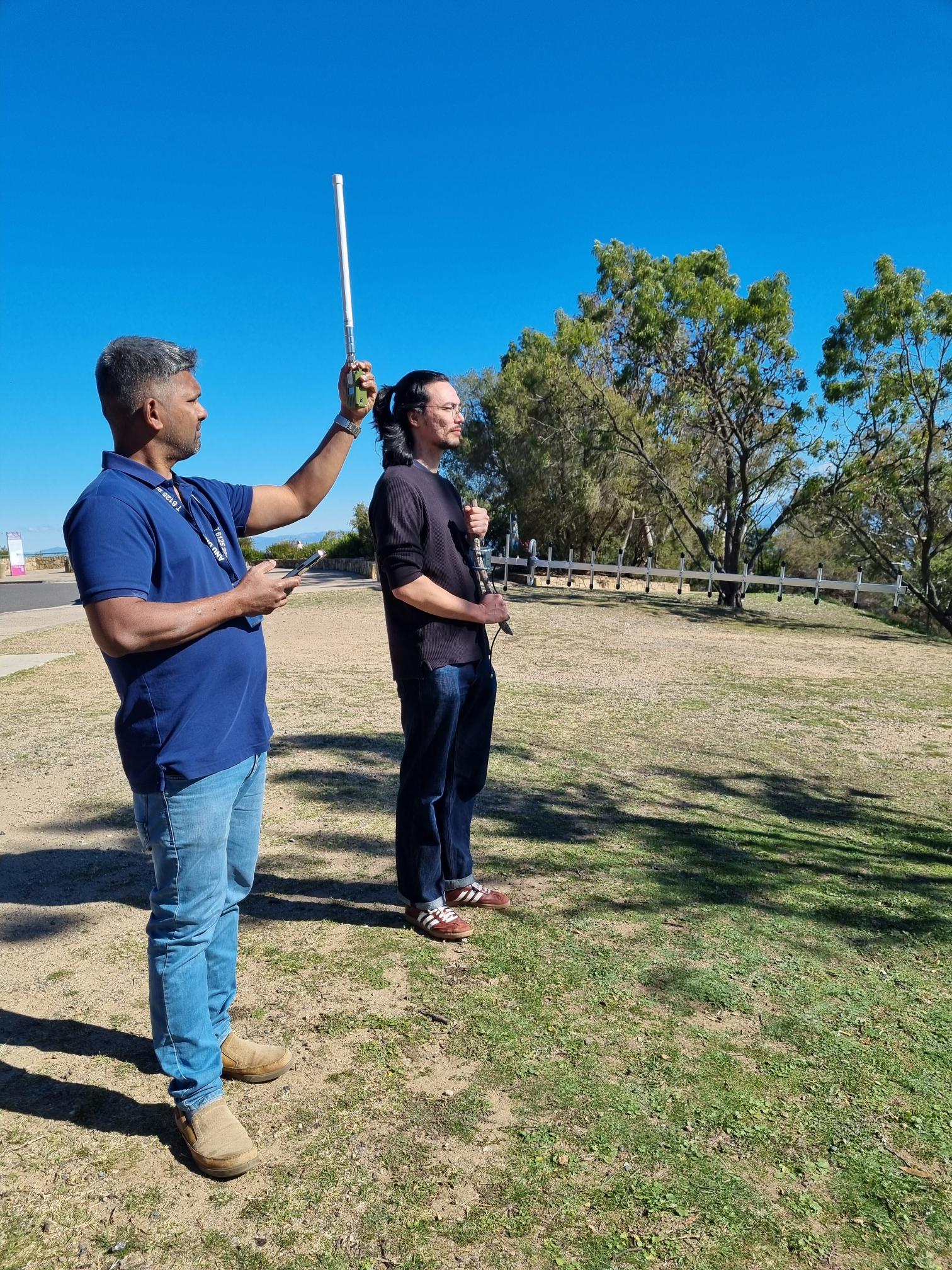
Investigation and small-scale testing of MeshCore as a backup communication network for emergency data transfer in rural areas. Builds upon the existing Meshtastic-based flood monitoring system while researching modern LoRa alternatives.
Feasibility study and options assessment of consumer-off-the-shelf (COTS) components to be used in the multi-hazard monitoring stations. Focuses on selecting appropriate sensors for the range of hazards prevalent in rural NSW.
Development of the physical harness for securing the sensor design to various landscapes, alongside power supply and regulation design to ensure low power consumption and long-lasting battery life in the field.
| Area | In Scope | Out of Scope |
|---|---|---|
| General | Testing within ACT; range, sensor, reliability, battery testing; desktop studies; liaison via project host | Testing outside ACT; regular site visits; integration with official emergency alert systems; permanent installation |
| WS1 โ Network | Small-scale MeshCore testing; LoRa platform research; range & reliability evaluation | Developing new communication networks; large-scale NSW testing; integration with existing networks |
| WS2 โ Sensors | COTS sensor options assessment; hazard research (flood, bushfire, landslide, storm, drought); installation requirements | Uncommon Australian hazards; deployment of permanent stations; development of new sensors |
| WS3 โ Enclosure & Power | Physical harness design; 3D-printed enclosures; power supply & regulation; solar charging; weatherproofing | Large-scale manufacturing; permanent infrastructure installation; long-term maintenance |
Four sub-basins in NSW have been identified as priority regions, selected from the previous Flood Safety Capstone project and the broader DRF-funded initiative. Each region faces unique challenges in data coverage and communications.
Primary focus from previous project; stream height and rainfall monitoring.
Smoke and temperature sensors to detect early signs of fire activity.
Soil moisture and rainfall indicators relevant to slope instability.
Wind speed and hail indicators for severe weather detection.
Temperature, humidity, and rainfall deficit tracking over extended periods.
Multi-parameter environmental sensing for comprehensive situational awareness.
The project runs across Semesters 1 and 2, 2026, structured around four audit milestones with a modified spiral systems engineering approach.
Established team communications, reviewed previous project repository and handover documentation, made contact with project host, and produced initial planning documents.
Research into communication platforms (Meshtastic, MeshCore, and alternatives) and hazard detection feasibility. All devices for detection to be decided by this milestone.
First prototypes of hazard detection device(s) complete and ready for field testing within the ACT region. Field testing plans established and underway.
All field testing complete, findings report drafted. Team reflections documented for future project onboarding and handover.
A six-person multidisciplinary capstone team from the ANU School of Engineering.
Supports electronics-specialised team members as a generalist and serves as the primary point of contact for all external stakeholder communications.
Manages and updates the project website, and designs 3D-printed enclosures and mounting hardware for the sensor system.
Designs and approves the power system for sensor nodes, and maintains the project repository structure and organisation.
Develops the firmware for the sensor system, ensuring correct integration between sensing subsystems and the MeshCore communication backbone.
Monitors workstream interdependencies to prevent critical path delays and plans for the final integration of both workstreams into a complete system.
Ensures environmental compliance and manages the team Trello board, keeping tasks prioritised and assigned from meeting outcomes.
The following deliverables will be produced and made available through this landing page and the project SharePoint repository.
Scope, objectives, stakeholder analysis, and system overview.
All documents, code, and design files in SharePoint.
WBS, schedule, budget, risk register, and communication plan.
Options assessment for the multi-hazard monitoring system.
Working prototype of the hazard detection sensor node(s).
Comprehensive documentation to onboard the next capstone team.
Visual summary of findings for the capstone exhibition.
Short video presenting the project outcomes to stakeholders.